












UBC Take a Uteck Bowl Shot at Montreal With Vanier Cup Berth Up For Grabs
The UBC Thunderbirds are looking to avenge their 2023 Vanier Cup defeat against the Montreal Carabins in Saturday's Uteck Bowl in Québec.
The last time the UBC Thunderbirds met the Montreal Carabins on the gridiron, the Vanier Cup was on the line. This time, a berth in the national championship game awaits the winner as the Thunderbirds attempt to avenge a hard-fought 16-9 loss to the Carabins in 2023 at CEPSUM at UdeM, Saturday at 1:15 p.m. PCT on CBC Sports.
“A few years ago in the Vanier Cup, it was a low-scoring game,” remarked UBC head coach Blake Nill earlier this week. “Of course, one of their strengths has always been defence, and we'll have to lean on our offence a little more at this stage. It's our strength vs their strength, and we'll see how that plays out."
For Montreal, UBC represents the latest obstacle in its bid to cement a modern U Sports football dynasty. The Carabins have won two of the last three Vanier Cups, including last year’s 30-16 defeat of the Saskatchewan Huskies in Regina. This year’s national championship will be decided on Nov. 28 at Québec City’s Stade Telus-UL, where Montreal upset previously undefeated Laval Rouge et Or in the RSEQ’s Dunsmore Cup last Saturday.
That site also hosted the Thunderbirds' last Vanier Cup victory, as UBC outlasted Montreal 26-23 to claim the program’s fourth national title in 2015. That back-and-forth affair saw both teams rack up over 500 yards of offense, but UBC’s opportunistic defense forced three turnovers by the Carabins. A formula similar to the one they employed that afternoon is likely needed if the Thunderbirds are to author another upset in La Belle Province.
Hostile Takeover
After dropping its opening game of the season, UBC has lost just one game since and, as a result, has played only one road game over the past six weeks.
Home field provided the advantage the Thunderbirds needed in each of their dramatic playoff victories, the latest a 41-39 double-overtime thriller that ended on a missed field goal by the Regina Rams and earned UBC the Hardy Cup.
Montreal has won four of its five home games this season, including a 28-21 opening-round win over crosstown rival McGill. Its only loss on home turf came against Laval, a 35-3 demolition in which the Rouge et Or amassed 435 yards of offense to just 153 for the Carabins. That game drew a capacity crowd of over 5,100 people to CEPSUM, and Nill expects Montreal’s campus to provide a raucous atmosphere on Saturday.
"I'm trying to approach this as an opportunity for a great experience playing in front of a hostile crowd, something the likes of which most of these kids have never had,” Nill added.
“We've piped in stadium noise during our week of prep at home and did as much as we could to simulate the type of atmosphere we'll face; now we'll just have to go in there and deal with it come game time."
Balancing Act
As far as offence goes, the key to UBC’s 8-2 overall record this season has been an attack that’s been as dangerous on the ground as through the air. The Thunderbirds’ running game averaged nearly 165 yards per game in the regular season but fell to 107 yards without Canada West Rookie of the Year Marvyn Larozar in the Hardy Cup.
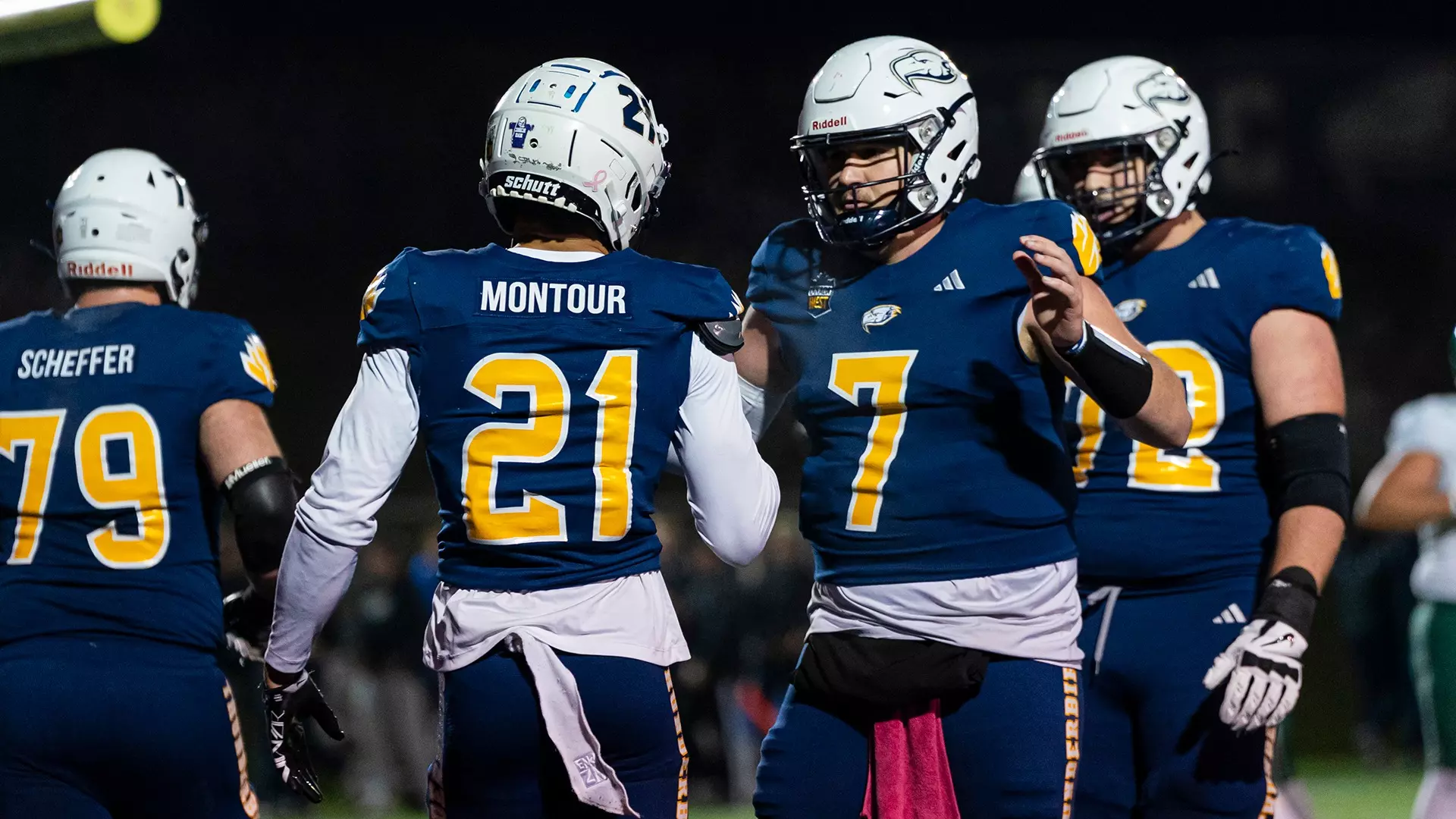
Quarterback Drew Viotto and explosive wideout Trey Montour headline UBC’s passing attack.
The dynamic duo accounted for 104 yards on five completions against Regina, a significant chunk of the 251 yards Viotto threw for on the day, a shade over his per-game average this season. Viotto has shown an ability to meet the moment in big games, throwing for a season-high 370 yards and three touchdown passes with first-place on the line against Saskatchewan in the regular-season finale.
While Montreal’s defense showed its pedigree by snuffing out Laval’s potent offense last weekend, that side of the ball hasn't been the Carabins' calling card this season. Opponents have averaged 24.5 points and nearly 335 yards of offense per game against Montreal, a departure from the suffocating reputation the program has built in recent years. The Carabins’ secondary was the difference against Laval, intercepting opposing pivot Victor Charland three times.
Air Traffic Control
x
View post ↗While the Thunderbirds showcased a stout run defense all season, they have been susceptible to prolific passers. UBC allowed over 262 yards per game through the air during the regular season, and allowed an eye-popping 443 passing yards and four touchdown passes in the Hardy Cup.
Montreal has thrived through the air this season, averaging 317 yards per game and nearly a first down per passing attempt. The aerial attack has been the backbone of an offense that has averaged more than 31 points and has only been held in check when it’s faced Laval this year.
The big question, however, is which quarterback will be behind centre when Montreal takes the field. Starter Pepe Gonzalez has been out with a shoulder injury since earlier October, but resumed practicing earlier this month.
Though he was not healthy enough to play against Laval, Gonzalez would provide a big boost to Montreal’s passing game should he return on Saturday, as he averaged well over 300 yards a game through the air in the four games he completed. Backup Esteban Bedoya has been excellent in his absence, but has not been as dangerous downfield as Gonzalez.
Montreal’s top target is Enrique Jamies Leclair, who averaged over 100 receiving yards per game and scored in each of the Carabins’ playoff wins.
Alive and Kicking
Should the game come down to splitting the uprights, there’s no decided advantage as both teams boast dependable kickers.
UBC’s Alex Hillyard made 4-of-5 field goals in the Hardy Cup, including a pair of crucial three-pointers in overtime, and has been successful on 18-of-23 (78%) attempts overall this season.
Montreal’s Etienne Jacques has converted on 17-of-21 (81%) of his field goal attempts, including the playoffs, but was unable to connect on his lone attempt against Laval last Saturday.